02 Jun 2026
GHK-Cu: A Copper Peptide Studied in Skin Biology
GHK-Cu is a naturally occurring copper peptide complex with one of the broader research profiles among peptides studied in skin biology, wound healing and tissue remodelling.
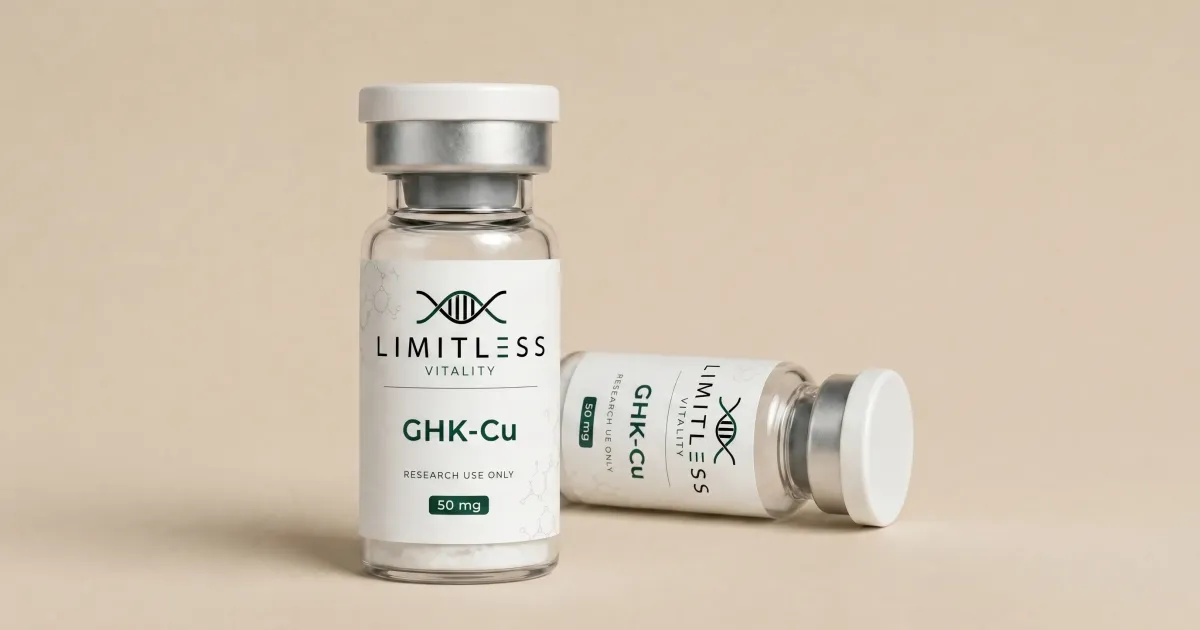
GHK-Cu is a copper peptide complex that occurs naturally in the human body. It consists of the tripeptide GHK (glycyl-L-histidyl-L-lysine) bound to a copper ion, and it has been the subject of research spanning several decades, with interest concentrated primarily in skin biology, wound healing, and tissue remodelling. It is one of the more extensively studied naturally occurring peptides, and the breadth of the research literature reflects how many different biological roles it has been examined for.
Where GHK-Cu Comes From
GHK was first identified in human plasma in the early 1970s. It is present in plasma, urine, and saliva, and concentrations are known to decline with age. Research has measured plasma GHK levels at approximately 200 ng/mL in young adults, declining to around 80 ng/mL by the age of 60. This age-related decline has been a driver of research interest, as the biological activities associated with GHK-Cu in younger tissue have prompted questions about the significance of this reduction.
The copper component is considered essential to the peptide's biological activity. GHK has a high affinity for copper (II) ions, and the copper-bound form is the version most studied in the context of tissue biology. GHK without copper has been examined as a comparator in some studies, with results generally indicating that the copper complex is the biologically active form.
Skin Biology Research
The largest body of GHK-Cu research relates to skin biology. Studies have examined its effects on collagen and elastin synthesis, glycosaminoglycan production, and angiogenesis in skin tissue. Research has also looked at its interaction with skin repair processes, including the behaviour of fibroblasts, the cells responsible for producing structural proteins in the dermis.
Work by researcher Loren Pickart, whose group produced much of the foundational GHK-Cu literature, identified GHK as a signal peptide released as a breakdown product of collagen following tissue damage. The hypothesis developed from this work is that GHK acts as a biological signal of tissue injury, triggering repair responses including increased synthesis of structural proteins and increased vascular activity in the affected area.
More recent research has examined GHK-Cu's interaction with gene expression. Studies using gene array analysis have identified a substantial number of genes associated with tissue remodelling, inflammatory regulation, and antioxidant responses that show altered expression in the presence of GHK-Cu. The scale of this effect on gene expression has been noted in the literature as unusually broad for a tripeptide of its size.
Wound Healing and Tissue Remodelling
Outside of skin biology, GHK-Cu has been studied in the context of wound healing more broadly. Research has examined its effects on wound contraction, re-epithelialisation, and the organisation of collagen in healing tissue. Studies in animal models have looked at GHK-Cu applied topically and systemically, examining histological markers of tissue organisation and recovery timelines.
Research has also examined GHK-Cu's anti-inflammatory properties. Studies have looked at its effects on inflammatory cytokine activity, with some research suggesting it may modulate the balance between pro-inflammatory and anti-inflammatory signals in tissue. This has made it a subject of interest in research examining chronic skin conditions as well as acute wound healing.
Hair Follicle Research
A smaller but consistent body of research has examined GHK-Cu in the context of hair follicle biology. Studies have looked at its effects on follicle size and hair shaft diameter in animal models, with the mechanistic hypothesis centring on GHK-Cu's effects on the dermal papilla cells that regulate follicle activity. This area of research is less developed than the wound healing and skin biology literature but has attracted growing attention.
Why Copper Peptides Have Mainstream Recognition
GHK-Cu occupies an unusual position among research peptides in that it has achieved recognition beyond the research community. Copper peptide serums and topical formulations have been commercially available in the skincare market for some years, drawing on the published research into GHK-Cu's effects on collagen synthesis and skin repair. This has made GHK-Cu one of the more accessible research peptides for people encountering the compound for the first time outside of a laboratory context.
The distinction between topical cosmetic formulations and research-grade GHK-Cu supplied for laboratory use is significant. Research-grade supply involves documented purity, identity testing, and handling protocols appropriate to scientific investigation.
Research Status
GHK-Cu remains a research compound in the context of systemic use. The topical literature is substantial, and some clinical studies have examined GHK-Cu formulations in skin aging and wound healing contexts. Systemic research is more limited. It has not received regulatory approval as a therapeutic agent for any indication.
View the GHK-Cu product page for compound specifications and availability.
All compounds discussed in this article are for research use only.